How Verizon uses AI video in its town halls
AI innovation can still happen in regulated spaces.

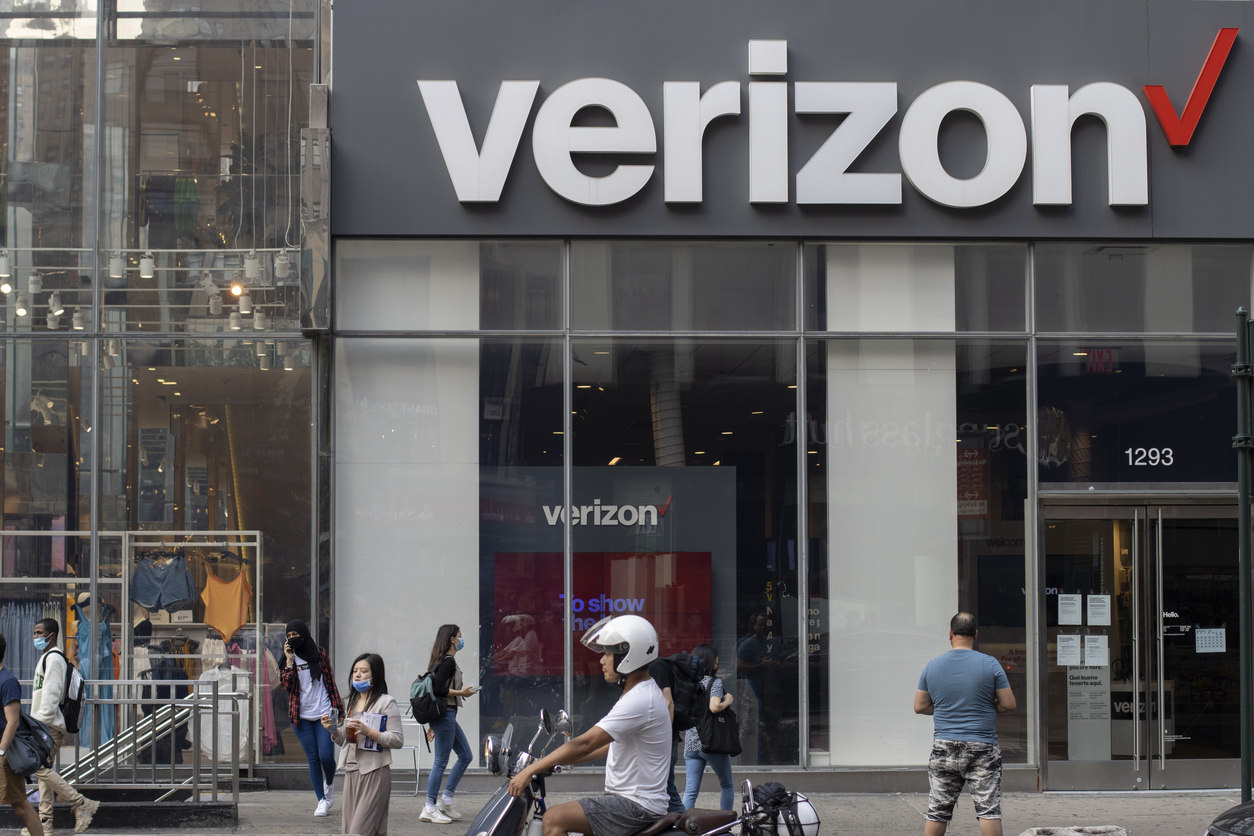
Town hall meetings are a great opportunity to communicate company updates in a direct, person-to-person fashion. At Verizon, internal comms pros have been using AI in their town hall meetings to help communicators move faster and serve employees better, all while maintaining the human side of leadership and adhering to carefully designed guidelines.
At Ragan’s AI Horizons Conference, February 2-4 in Fort Lauderdale, Steve Van Dinter, senior director of internal communications at Verizon, will share how AI is transforming internal comms content at his company. He said that comms pros need to make employees aware that AI advancement is moving quickly, but there are still guardrails in place.
“Everyone is trying to push their teams to learn as quickly as possible, while still reminding them there are things we simply can’t do yet,” Van Dinter said.
Blending human and automated inputs
Verizon has been automation-forward in its approach, requiring communicators to use AI in some capacity during first drafts of messaging. This balance of humans and AI is the motivating force behind their town halls.
“Everyone must be able to show what the original output was, and then the human element that they added to it,” Van Dinter said.
Van Dinter said that these policies are meant to increase AI familiarity for comms, but that trust in the people compiling messaging.
“The goal is to get as many people using the tools as possible, but not at the expense of trust,” he told Ragan. “If we lose that, none of the efficiency gains matter.”
For internal comms pros in regulated industries, Verizon’s approach to AI shows that speed doesn’t need to come at the cost of compliance.
“We’re trying to thread the needle between moving quickly and being responsible,” Van Dinter said. “That balance is what allows us to use AI in meaningful ways without crossing lines we can’t walk back.”
Balancing production speed with guardrails
While compliance is always a major concern for external comms at a regulated company like Verizon, Van Dinter said that internal communicators have a bit more freedom to use AI.
“Internally, it’s a little less of a concern, so we do get more leeway for presentations that are just going to in-house groups,” he said. “That’s where AI makes the most sense, because it helps us move faster without putting the brand at risk.”
Van Dinter said that AI has helped Verizon’s content production team speed up the internal content team’s production process for town hall videos.
“In the past, this would have taken more time and more money, but now we can create these videos quickly and use them across leadership events and internal communications,” he said. “If we’ve got access to the tool and we know how to use it, there’s no reason to slow things down. AI lets us create content for leadership webcasts and town halls while the message is still timely, instead of waiting weeks for production.”
Van Dinter said that in a recently produced video to play in town hall meetings, an AI-generated animated character walks the audience through different rooms on the screen, and each one covers a different topic. A major advantage here is that the AI avatar can use preloaded information set up by the comms team, which saves time on producing videos with human leaders explaining everything and recording it. He added that each segment can stand on its own, allowing the content to be reused as short-form video across internal channels following the meeting.
However, even with technological advancements, human leadership remains at the core of town halls.
“We pause the presentation, and a leader talks about the tactic competitors are using and why our value brands are breaking the mold,” he said. “So the video becomes a storytelling device that leaders can build on in the moment. We’re not replacing leaders with AI. The leader is still driving the message.
While the new and speedier style of production is exciting, it isn’t without guardrails or guidelines. Per Verizon’s internal policies, employees aren’t allowed to use artificial intelligence to make AI-generated humans, like a digital twin avatar. Van Dinter said it was on communicators to be abundantly clear about what they are and aren’t allowed to generate.
“The tools don’t restrict their ability to create AI humans,” Van Dinter told Ragan. “So we need to be pretty clear about that as communicators. From a training perspective, it has to be in the training. And from a communications perspective, it has to be called out when programs go out.”
Van Dinter said that it’s up to his comms team to get the message across about AI rules and regulations to ensure that the tech is adopted smoothly.
“When teams know what’s allowed and what isn’t, they can move with confidence instead of hesitation,” he said. “That’s what lets AI be useful rather than risky.”
To register for our AI Horizons Conference, click here.
Sean Devlin is an editor at Ragan Communications.