How AI helped Gutenberg’s Arnold Miller manage more with fewer tools
A look at how a former journalist is using AI to take back his time.

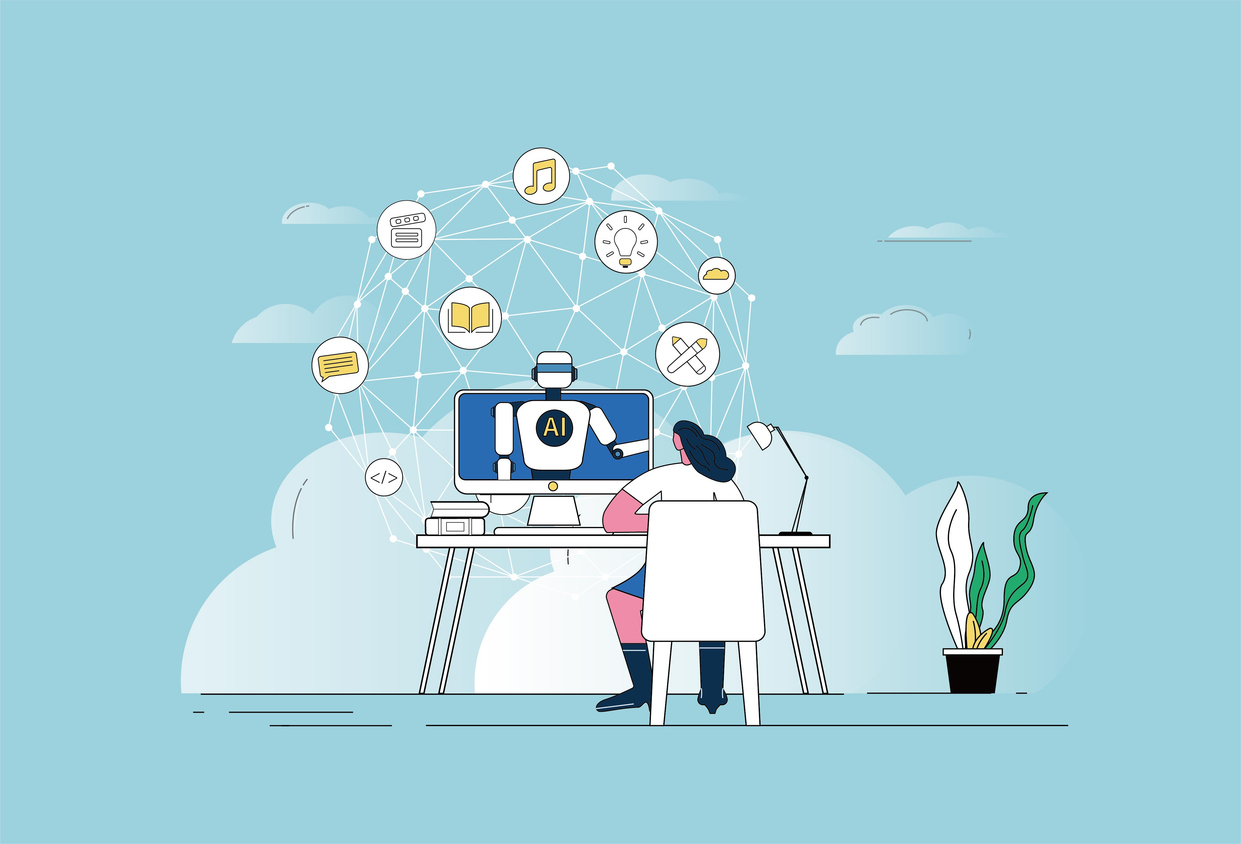
AI can prove very helpful as a time saver for communicators and can even cut down on tool clutter, winnowing down dozens of disparate tools into one helpful automated hub.
In the latest edition of our “How AI Helped Me” series, we spoke with Arnold Miller, senior vice president at Gutenberg, about how AI helps his global team unify asynchronously and how AI is on the verge of becoming secnd nature for communicators.
1. Could you tell us a little about how you first started interacting with AI in your role, and how it’s evolved?
I spent over two decades of my career in daily journalism and then migrated into communications for the past five years. I initially began my AI journey with LLM queries and interactions, aiming to enhance my own writing and communication skills. I was elated to see my AI interaction evolve from one to two sentences to massive collaborations between multiple departments and colleagues. It’s also helped with producing award-winning work for our clients.
2. What’s something about AI that you think communicators need to be talking about but aren’t discussing enough?
Communicators and agencies need to invest in building AI fluency of their teams. That requires a focus on three things — people, process and patience. Those are the three most important elements when moving towards a truly efficient AI workflow, and in many ways I feel they are all equally weighted. Yes, everything will move faster. But you still need the people in the process, and to have patience for the results.
3. When you first started using AI, how did you educate yourself on how to use it?
Whenever I get a new piece of hardware or software, I just start experimenting with it. What does this button do? What is that tab for? What happens if I paste that here? I’m a very visual learner, and I enjoy exploring on my own until I hit a wall. Then I read the documentation, consult the many oracles of Reddit and Wired for guidance.
4. How exactly does AI factor into your role?
I lead a large global team and the most valuable thing that AI gives me back is time. Research that used to take weeks or days now takes hours or minutes. Having my content, video, social and PR teams on a collaborative platform to brainstorm as we think through strategic approaches on client work gives us a unique advantage that was not possible in the pre-AI world. Our teams were using multiple tools for research, social media posting, editing and translations asynchronously. Today with our CambrianEdge AI tool, we can do these things on a single call. That is the real power of using AI in our workflows. Additionally, we are all aligned at the beginning of the project, which adds to the velocity and creativity of our client work and outcomes.
5. Have you seen any changes to your workflow or customer/stakeholder satisfaction since you’ve begun using AI and automation?
Absolutely. Everything is now bigger, better, faster and stronger. I was on a Teams call at the beginning of December when we told a client we’d have a brand new 60-second video spot, with a fresh VO by the end of the day. They did not believe us. We delivered it, and they loved it.
6. Do you have a big prediction for AI usage in the next few years?
Yes. AI has already changed everything. The past few years and the next few years are similar to when electricity started rolling out to the masses across the country. Edison and Tesla competed to standardize AC and/or DC, and figure out how to get this new energy source to every home and office, as well as across huge distances. At that time, no one could predict that this new power source would lead to television, microprocessors, and a refrigerator in every home, permanently changing mass communication, economies and how we eat.
AI will become like the part of our brain that regulates our heart rate and blood pressure, breathing and body temperature. It will always be working for us, and we won’t even notice it until we want to pay attention to it.
For marketers and communicators, the biggest shift will be the collapse of the martech tool sprawl into a single native-AI platform where we can do most of our work. It will range from creating blogs to writing press releases to generating images and videos. Additionally, it’ll include posting comms content directly to every external platform you can think of. While earlier our teams used 20 different tools, today we use a single platform — because of AI.
Sean Devlin is an editor at Ragan Communications.