
DOWNLOAD THE ENTRY KIT
RECOGNITION
EACH CATEGORY WINNER WILL RECEIVE:





Recognizing the best places to work for communications professionals
Ragan’s Top Places to Work in Communications Awards recognize the agencies, companies, nonprofits and organizations creating exceptional workplaces for communications, public relations and marketing professionals.
What makes a great communications workplace? Strong cultures give communicators the support, trust, resources and opportunities they need to do meaningful work and build lasting careers. That can include competitive compensation and benefits, career development, supportive leadership, employee recognition, flexibility, wellbeing, mentorship, inclusive workplace practices, employee voice and thoughtful preparation for changes such as artificial intelligence.
The 2026 program recognizes organizations of different sizes and types, with dedicated categories for communications and PR agencies, corporations, nonprofits and other organizations. Spotlight categories also give employers the opportunity to showcase specific parts of the employee experience, from learning and development and work-life balance to hybrid work, transparency and responsible AI workforce readiness.
Strong entries will show what the workplace offers, how those practices support communications professionals and what difference they make. Entrants may share employee feedback, engagement or retention data, participation rates, career growth, workplace policies, benefits, testimonials or other evidence that helps judges understand the employee experience.
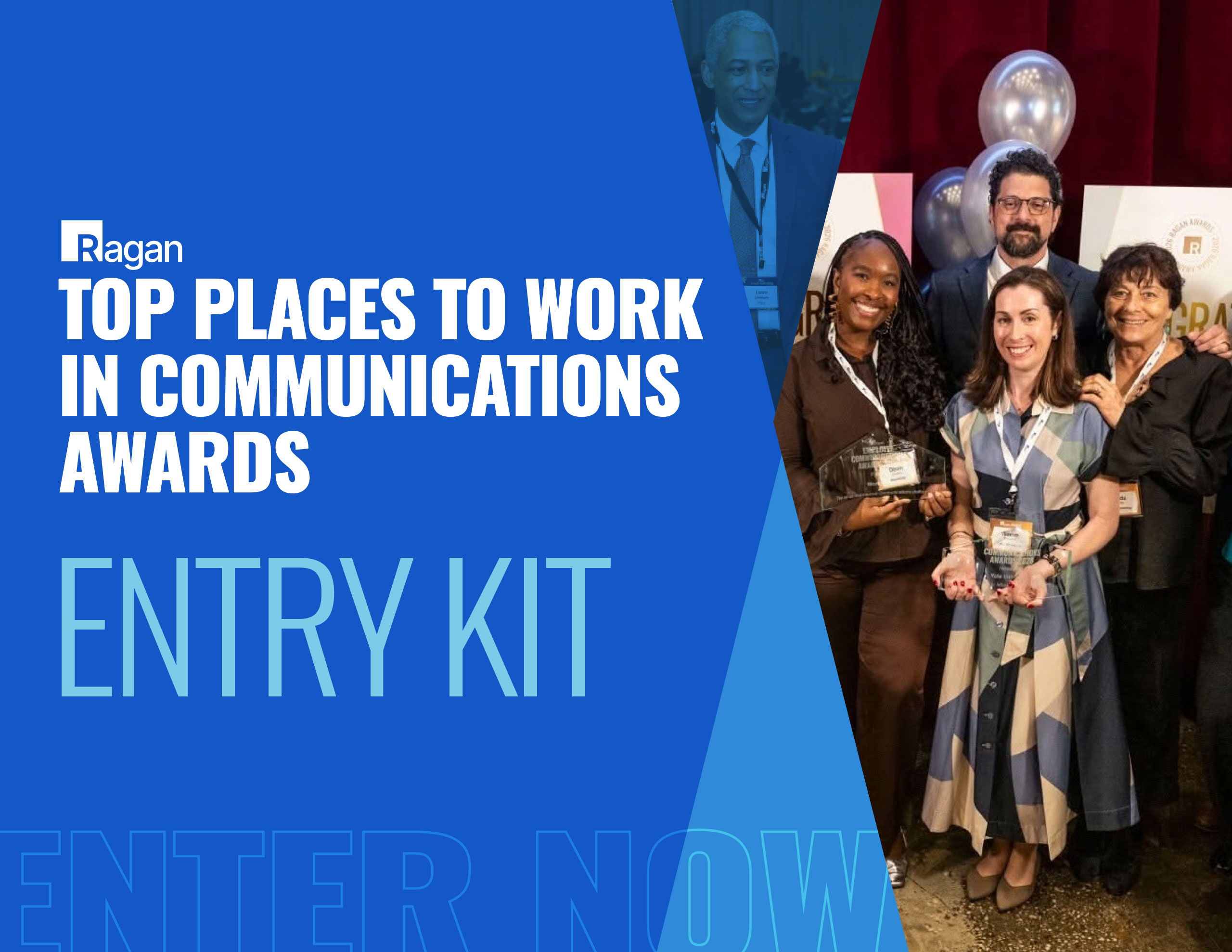
Being named one of Ragan’s Top Places to Work in Communications gives organizations independent recognition they can share with employees, prospective talent, clients and the broader communications industry. Finalists will be recognized in advance, and winners will be announced at a live event in spring 2027.
If you have built a workplace where communicators can contribute, grow and succeed, tell us what makes it one of the best places to work in communications.
CATEGORIES
AGENCIES
Boutique Agency
Small Agency
Mid-Size Agency
Large Agency
CORPORATIONS
Small (100 Employees or Less)
Mid-Size (101-1,000 Employees)
Large (More Than 1,000)
NONPROFITS & ORGANIZATIONS
Small (100 Employees or Less)
Mid-Size (101-1,000 Employees)
Large (More Than 1,000)
SPOTLIGHT CATEGORIES
Career Advancement Opportunities
Compensation, Benefits & Wellbeing
Employee Engagement Programs
Employee Recognition Programs
Employee Voice, Trust & Transparency
Executive Leadership
Hybrid Workplace
Inclusive Culture, Belonging & Accessibility
Internship Program
Learning & Development
Mentorship Program
Onboarding
Remote Work Culture
Responsible AI & Workforce Readiness
Work-Life Balance
HOW TO ENTER
To enter Ragan’s Top Places to Work in Communications Awards, choose the category or categories that best represent your organization and complete the online entry form by the published deadline.
- Choose your category or categories. Review the agency, corporate, nonprofit and organization categories along with the Spotlight categories and select the strongest fit for your workplace.
- Gather evidence of your employee experience. Consider workplace policies, programs, employee feedback, engagement or retention data, benefits, career-development efforts, testimonials and other information that demonstrates what makes your organization a strong place to work for communicators.
- Complete your entry. Follow the prompts in the online entry form and explain your workplace culture, approach, programs and results. Include enough context for judges to understand what distinguishes the employee experience.
- Add supporting materials and submit. Upload relevant materials, review your entry for accuracy and complete payment by the deadline.
Organizations may enter more than one relevant category. Tailor each entry to the category selected and focus on the workplace strengths and evidence most relevant to that recognition.
ELIGIBILITY REQUIREMENTS
These awards are open to in-house, agency and independent communication practitioners in the private, corporate, nonprofit and government sectors. Enter your work, the work of your organization or submit entries on behalf of your client.
Companies from around the world are welcome to enter as long as the entry is submitted in English.
Contact Brendan Gannon to find the perfect category for your campaign or project. You can call 312-960-4407 or email [email protected].
This year’s program is open to any work executed between Nov. 1, 2025, and Nov. 13, 2026, inclusive.
ENTRY FEES
The fee for this program is $550 per entry.
A late fee of $325 per entry will be added to all entries received after 11:59 p.m. Central time, November 6, 2026.
All entries are non-returnable and non-refundable.
Frequently Asked Questions
What are Ragan’s Top Places to Work in Communications Awards?
Ragan’s Top Places to Work in Communications Awards recognize employers that have created exceptional workplace cultures and employee experiences for communications, public relations and marketing professionals. The program is open to agencies, corporations, nonprofits and organizations and recognizes both overall workplace excellence and specific strengths such as leadership, professional development, benefits, employee engagement, flexibility, inclusion and work-life balance.What makes a top place to work in communications?
A strong communications workplace gives employees the support, resources, trust and opportunities they need to succeed professionally. That may include competitive compensation and benefits, career growth, effective leadership, learning opportunities, flexibility, employee recognition, wellbeing programs, inclusive practices, mentorship and a culture where employees can speak openly and contribute ideas. Judges will also consider evidence showing how these practices affect the employee experience.Who can enter the Top Places to Work in Communications Awards?
Companies, communications and PR agencies, nonprofits, government organizations and other employers may enter. Organizations of different sizes are eligible, and entries are accepted internationally as long as they are submitted in English.Are there awards specifically for PR, marketing, digital and communications agencies?
Yes. Ragan recognizes PR, marketing, digital and communications agencies in four size categories based on annual income: Boutique Agency, Small Agency, Mid-Size Agency and Large Agency. These categories allow agencies to compete alongside organizations with comparable business scale.Are there categories for corporate communications teams and nonprofits?
Yes. Separate categories recognize small, mid-size and large corporations as well as nonprofits and organizations. These categories are based on employee count so organizations can be evaluated in an appropriate size group. The Spotlight categories cover many parts of the employee experience, including benefits and wellness, compensation, career advancement, employee engagement, employee recognition, employee voice and transparency, executive leadership, hybrid and remote work, inclusion and belonging, internships, learning and development, mentorship, onboarding, responsible AI and workforce readiness, and work-life balance. Organizations may enter the categories that best represent their strongest workplace practices.What should we include in a Top Places to Work entry?
A strong entry should explain what makes your organization a strong workplace for communications professionals and provide evidence that supports those claims. Useful information may include workplace programs and policies, employee survey results, engagement data, retention rates, internal promotion or career-growth data, participation rates, employee feedback, testimonials, benefits, learning opportunities and measurable improvements. Not every entry needs every type of evidence. Include the information that most clearly demonstrates your organization’s employee experience.What do the judges look for?
Judges will look for a clear explanation of the workplace experience, thoughtful programs and practices, leadership commitment and evidence that employees benefit from the organization’s approach. Strong entries go beyond listing perks. They explain why programs or policies exist, how employees experience them and what results demonstrate their value.Can our organization enter more than one category?
Yes. Organizations may enter multiple relevant categories. For example, an agency may enter its appropriate agency-size category and also submit entries for areas such as Learning & Development, Employee Recognition Programs, Remote Work Culture or Responsible AI & Workforce Readiness. Each category should be treated as its own entry, with information and evidence tailored to that category.Why should an organization enter a workplace award specifically for communications?
Communications professionals have distinct workplace needs, including access to leadership, professional development, strong manager support, appropriate resources, flexibility and opportunities to grow their skills as the profession changes. Recognition from Ragan gives employers a way to demonstrate their commitment specifically to communications talent. Organizations can use the recognition to celebrate employees, support recruitment and retention, strengthen their employer reputation and show clients and industry peers what makes their workplace distinct.What is the deadline for Ragan’s 2026 Top Places to Work in Communications Awards?
The standard entry deadline is November 6, 2026. Entries submitted after the standard deadline may be accepted through the late deadline of November 13, 2026, with an additional late fee. Entrants are encouraged to complete their submissions by the standard deadline.When will finalists and winners be announced?
Finalists will be announced in advance of Ragan’s live Top Places to Work in Communications event in spring 2027. Winners will be revealed and recognized at the event. Additional recognition will appear across Ragan’s websites, newsletters and social channels.Additional Questions
If you have any questions about the program or problems submitting your entry, please call Brendan Gannon at 312-960-4407 or email [email protected].
Sponsorship Opportunities
If you are interested in sponsoring one of Ragan Communications’ award programs, please contact Morgan Einspanier at [email protected].