Data: How employees prefer to receive leadership communications (and why they sometimes fail)
Communicators can guide leaders to the right channel and timing.


When big changes happen, employees want to hear from their leaders. And some recent data shows that leaders see more changes on the horizon, underscoring the need to communicate these situations correctly.
According to a recent report from The Grossman Group and The Harris Poll titled “The Change Tipping Point,” over 50% of business leaders polled anticipated more than three major changes over the next two years. Additionally, the survey had some interesting data regarding what holds change back from success.
• 27% of employees surveyed in the data found that changes at their place of work didn’t succeed because of a lack of empathy in the communication of the change process. And
• 25% of employees polled stated that inadequate overall communication about organizational changes contributed to the failure of changes to properly take hold.
• 19% of business leaders asked about why changes fail stated that it had to do with an inability to communicate changes in a timely fashion.
• In addition, an overwhelming 78% of employees expressed the desire for changes to be communicated more effectively in the future.
The data reveals an interesting situation for communicators and the leaders they’re crafting change comms messaging for. Leadership communicators need to ensure they’re striking a balance between informativeness and empathy when changes do happen — doing so shows employees their experience matters and can go a long way toward building culture. For instance, rather than just rote statements from the C-suite during a major change like a merger or downsizing that impacts employee teams, communicators should work with leaders to pursue humanizing comms pathways.
Videos, department meetings edge out email
The data also showed that the way in which employees get the message of imminent organizational changes goes a long way toward how the news is received. For instance, 47% of employees polled in the survey stated that they’d prefer to hear about major changes in a video message from their CEO, followed by 46% preferring a department meeting and 41% wanting email communication from their leaders.
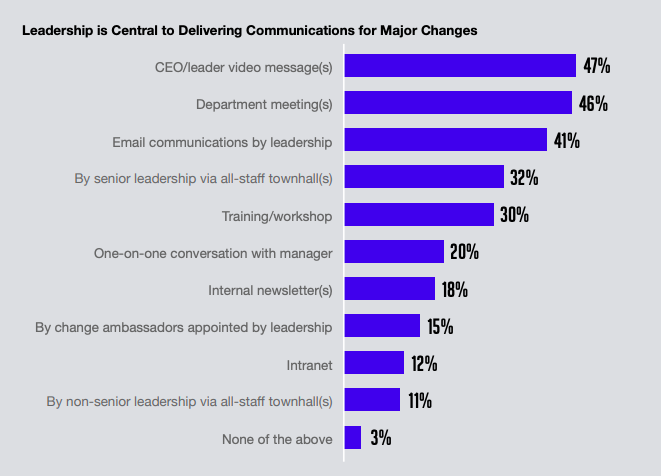
Source: The Grossman Group and The Harris Poll
In addition, the study also provided more data that underpinned the importance of leaders getting out in front of change comms:
● Without strong leadership communication, change efforts were 5.5 times more likely to fail.
● With a clear communication timeline, change efforts were twice as likely to succeed.
● 87% of leaders were responsible for communicating change at their organizations.
● 99% of business leaders thought they communicated change well — but just 25% of employees felt their leaders communicated change effectively.
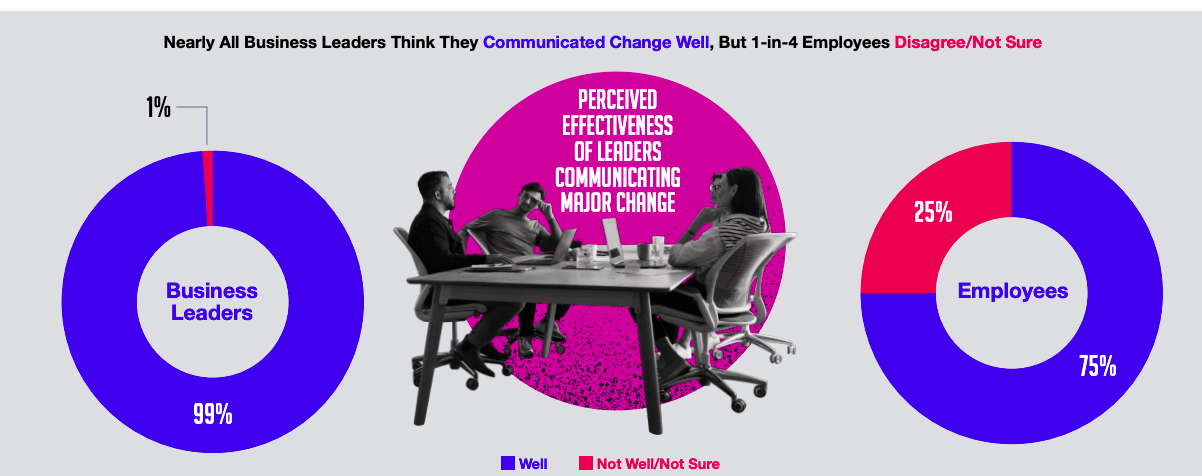
Source: The Grossman Group and The Harris Poll
When major changes do happen, it’s clear that leaders need to be out in front of any messaging and employees want to hear from their leaders. That’s at the center of the all-important trust that any organizational culture is built on. And communicators hold the keys to making that happen effectively.
By pursuing channels that employees prefer according to the data (like video, emails or in-person meetings), comms pros can help build trust in not only the process of change itself, but the people leading it. That means getting leadership coached on how to talk about changes and how they’ll affect employees, from the top of the C-suite to managers and the rank-and-file.
Organizational changes have very real impacts on the people who give a company its identity — the employees that are culture drivers. Keep the message within the mission and values of the company and within the personality of a given leader — doing that can go a long way toward determining whether a change comms campaign is a success or failure in the long-term.
Sean Devlin is an editor at Ragan Communications. In his spare time he enjoys watching the Phillies and Eagles.