Ragan/Harris X survey looks at how CEOs and communicators view comms
Reflecting on past data to see where we’re headed.


The summer is over, and that means we’re getting ever closer to the 2025 edition of the Ragan and HarrisX Survey of Communications Leaders. This report provides a unique snapshot of what communications leaders are thinking about in the present moment and what they consider important in the months and years ahead.
In anticipation of this year’s edition of the survey, let’s take a quick look back at some of the highlights from last year’s survey and the key takeaways for internal communications professionals. The survey was conducted among 437 CEOs and other high-ranking communications officials by HarrisX from June to August of 2024.
Trust in the top
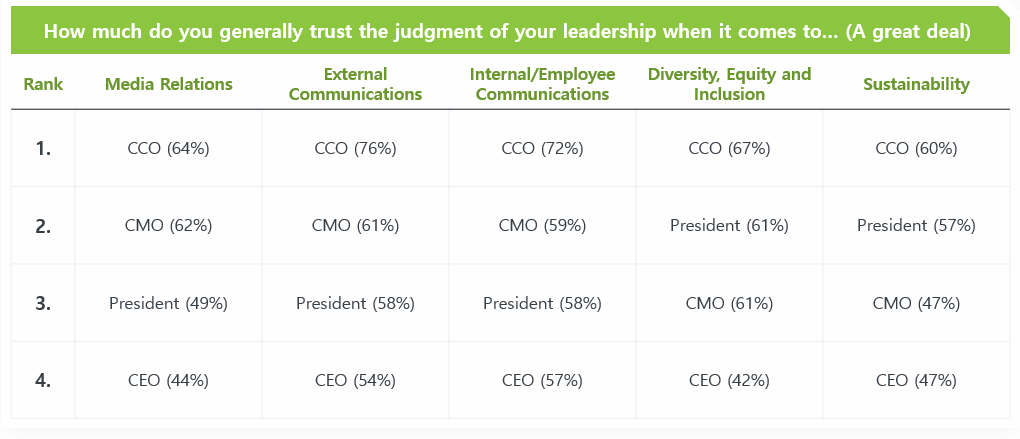
Last year’s survey reported some interesting data on the subject of trust. It found that just 57% of respondents agreed that they supported their CEO’s judgement a great deal when it comes to handling internal and employee comms, but trust in the CCO (chief communications officer) sits at a higher 72%.
 Source: Ragan/HarrisX
Trust is everything in communications, especially internal and employee comms. Without trust in leaders, it’s next to impossible to foster a vibrant culture through messaging. This data shows that despite a fair amount of trust in leaders to handle messaging to employees, there’s still ground to be made up — and that’s often done through intentional visibility and transparency.
There’s also an element of this data that shows communicators are trusted to get the job done when it comes to putting a message together and getting it out to the right people. The seat-at-the-table argument is a well-worn one, but it’s that way for a reason. When communicators have a leadership role and can help influence cultural messaging, a company stands to be quite a bit stronger from a culture and retention perspective than one that doesn’t value comms as much.
The rise of AI
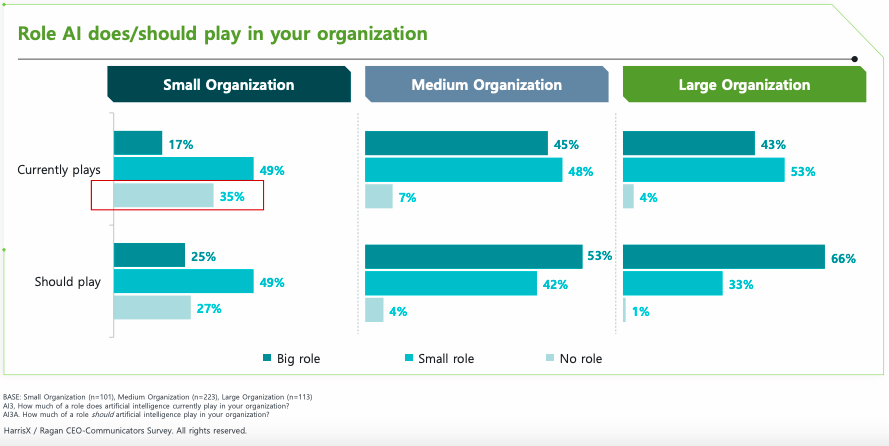
AI’s been on everyone’s mind over the past several years, and comms leaders are no exception to the trend. Last year’s data found that communications leaders stated that AI played a role in their organizations last year, but the adoption level varied by company size.
The data found that while 45% of leaders at medium-sized organizations and 43% of leaders at large companies had AI playing a major role in operations, that figure fell to just 17% for small organizations. Similarly, 66% of leaders at large companies and 53% of leaders at medium companies felt that AI should play a big role in how they get the job done, as opposed to 25% for smaller organizations.
 Source: Ragan/HarrisX
It’s also worth noting that the number of leaders who feel AI should play no role in their organization going forward is quite small in organizations of all sizes. It bears watching whether this number will shrink even more with the next edition of the survey.
Additionally, last year’s survey found that CEOs and comms leaders alike at organizations of all sizes felt that AI would amplify misinformation coming from platforms and websites operated by big tech companies. With AI being such a young technology, it’s incredibly important for comms pros and employees in general to approach AI-generated information with great care and a discerning eye. AI can be a great productivity assistant, but it doesn’t replace the judgment of human beings — and communicators should reinforce that concept in their AI-related internal messaging.
 Source: Ragan/HarrisX
The genie is out of the bottle with AI, and it’s here to stay. It’s key for comms pros to have open dialogues about what AI use looks like at their company. That often means working in lockstep with IT to create and share documents outlining the proper use and guidelines around AI use at work. AI adoption is most successful when you’re transparent about what’s expected of employees, and communicators need to be at the forefront of that conversation.
As 2025 winds to a close, keep an eye on this space to learn more about what comms pros are considering in today’s environment. Their insights might just help you navigate through your own communications-related challenges.
To participate in this year’s survey, click here.
Sean Devlin is an editor at Ragan Communications. In his spare time he enjoys Philly sports and hosting trivia.