What your comms channels and tech tell employees about company culture
Is a dated email-first internal comms strategy holding you back?

Internal comms can say all the right things about an organization’s culture. But if the channels and tools carrying those messages feel outdated, employees will notice. As AI raises expectations for workplace technology, the gap gets harder to hide.
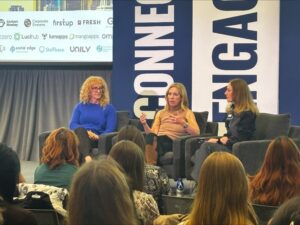
Comms teams tend to evaluate channels on reach and open rates. Chris Dickey, head of corporate communications at Nuveen, told Ragan that employees pick up on a lot more than whether a message reached them.
“The channels a company uses are a really good reflection of how it views culture,” he said. “A heavy reliance on email points to very conservative thinking about who can say what to whom. Do I have access to a leader, even if it’s just their handle on Viva Engage? Do we want to put voices behind the things we talk about, or do we want anonymized emails that are just updates?”
Communicators can use that as the basis for a channel audit by asking what each channel lets employees do, not just what it information it lets them consume. Dan Mulcahey, vice president of internal communications at Nuveen, said comms pros also need to keep in mind a generational aspect of channel selection.
“People don’t walk into work and trade their texts, WhatsApp and social media for an old intranet and some emails,” Mulcahey said. “Gen Z didn’t grow up using email as their main way to communicate. A lot of organizations moved forward on LinkedIn much faster than they changed their internal platforms. Harmonizing the two is how you show the say-do. We’re going to get your feedback, but are we actually going to do anything about it?”
Focus on the channels you can control
Dickey said the disconnect between brand and experience shows up in a lot of companies’ employee surveys. It can start with the story comms helps to tell.
“Internal comms, marketing, branding and strategy teams can come together on a nice narrative about who we are and what we do,” he said. “It looks really polished. Then you open your laptop, it takes 20 minutes to warm up, and you’re working on a legacy system. It’s frustrating, but it’s frustrating because we aspire to be those forward-looking, cutting-edge employees.”
Comms won’t fix a slow laptop or make the final call to retire a legacy system. But Mulcahey said many comms teams aren’t empowered to shape even the channels that carry their own messages, but that Nuveen’s team has made that a priority. It moved from one-way legacy email to two-way conversation on Viva Engage and is building an employee app within the Microsoft tools employees already use.
“Comms owns the messaging and where the message lives,” he said. “To the extent we can improve that experience for employees, it helps make what we’re saying real.”
Put AI to work for you
At Nuveen, the comms team experiments with AI alongside a dedicated developer who sits in the company’s IT department. Mulcahey said that communicators bring the developer problems that AI might be able to help them figure out. One of those was the company’s internal newsletter.
“We built a tool that takes our Viva Engage posts and runs them through a Copilot-powered summarizer based on our parameters, like word count and title length,” he told Ragan. “Our corporate team can build their newsletter without involving us. I remember coordinating newsletter meetings and nitpicking little things. All that is out the window now.”
Speed matters most with employee feedback, where a slow turnaround can look like no one is listening. Dickey uses Copilot to get town hall input to leaders while it’s fresh.
“Getting town hall survey data to leaders used to take a week of reading responses and forming a point of view on sentiment,” he said. “Now you can tell Copilot to summarize an Excel sheet and give you the top five themes and who said what. The first time I did that, our CEO walked past my desk, and I showed him the results the same day as the town hall.”
Your best messaging material still comes from people
AI can help communicators develop content, but it’s best at repackaging material that already exists. Communicators still need to be keen listeners to capture the firsthand material that makes for great employee comms.
During a town hall, an employee asked a leader a sensitive question and got an answer Mulcahey had never heard from that leader before. He didn’t divulge specifics, but he said that answer now sits in the collection of the leader’s remarks he uses to draft posts and scripts. No AI tool could have captured that nuance and come up with it on its own.
“AI is a facilitator,” Mulcahey said. “It’s helping us extend the humanity, not replace it. At its worst, AI creates generic content that isn’t in anybody’s voice, and employees can see that. But the worst comms before AI was corporate speak and jargon, too. It’s the same problem we had before AI. You still need authenticity.”
Sean Devlin is the senior internal communications editor at Ragan. You can connect with him on LinkedIn here.