Meta notifies employees of layoffs at 4 a.m.; Standard Chartered CEO backtracks after calling some employees ‘low value’
Plus, a look at how Vox staff found out the company was bought.

Greetings, comms pros! Let’s take a look at a few news stories from the last week and see what we can learn from them.
1. Meta cuts 8,000 jobs with early morning email and wide-ranging memo
Tech giant Meta is cutting jobs yet again, and according to a report from Business Insider, it sent notifications to thousands of affected employees across three regions at 4 a.m. local time on Wednesday. A note from HR chief Janelle Gale said Meta was, “at the stage where many orgs can operate with a flatter structure with smaller teams of pods/cohorts that can move faster and with more ownership.” In addition, Business Insider obtained another memo that affected employees received, which echoed Gale’s words.
As previously shared, we have decided to reduce headcount as part of our continued effort to run the company more efficiently and to allow us to offset the other investments we’re making. Unfortunately, your role has been eliminated as part of today’s reorganization. Before sharing additional details, we want to thank you for all you’ve contributed to Meta. We appreciate the important role you’ve played in the company’s journey.
These two layoff messages from Meta emphasize that speed and efficiency are now core values at the company and frame the job cuts as part of an internal redesign of how the organization operates at a fundamental level. But communicators also need to consider the rollout of these layoffs. According to reports, they were sent at 4 a.m., paired with tech shutoffs. That’s before most employees are awake for the day, and it likely came as a shock to many employees who weren’t laid off but lost team members. Job cuts in the name of efficiency are nothing new, but layoff communications can’t lose humanity in the name of slightly increased speed.
2. Standard Chartered CEO recants comments on “low-value human capital”
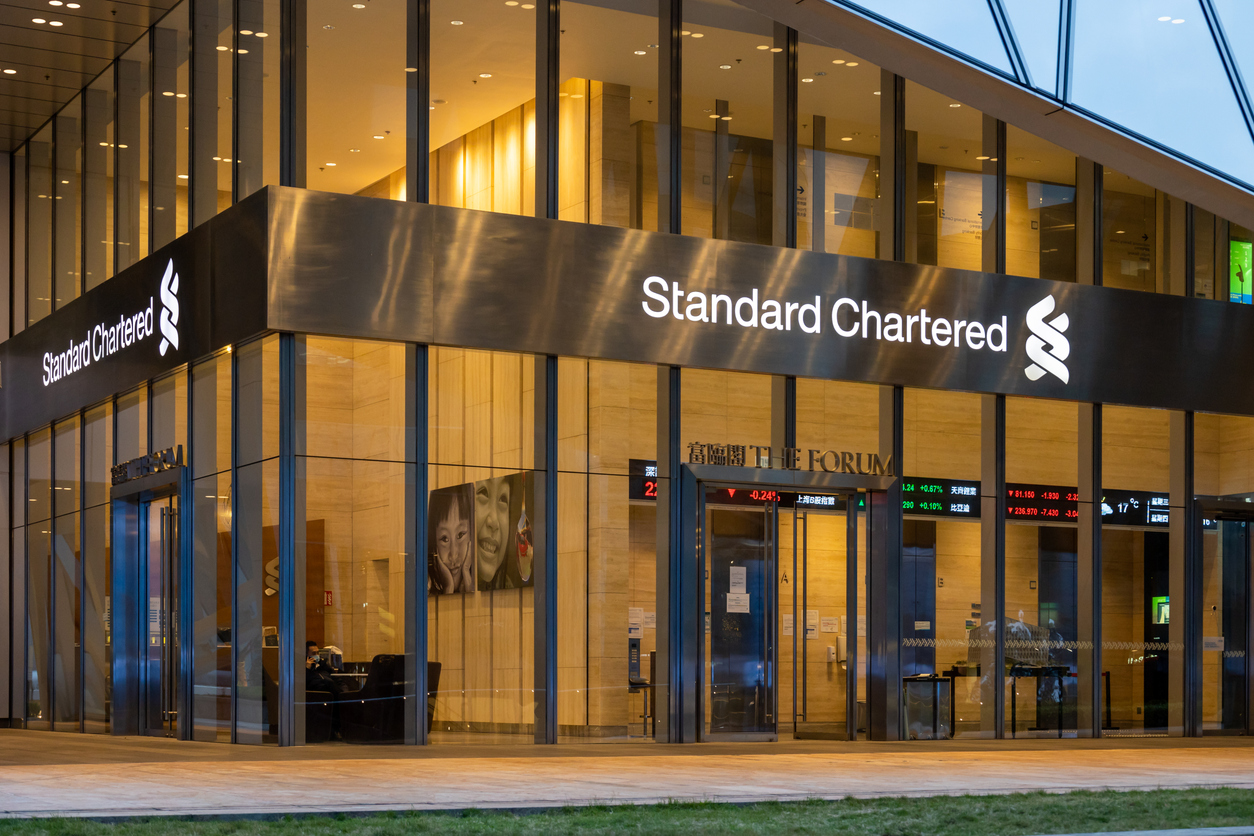
Standard Chartered chief Bill Winters retreated from comments that his financial institution would cut thousands of roles and replace “low-value human capital” — i.e. people that work for his bank — with artificial intelligence. According to a report from The Wall Street Journal, Winters sent a memo to the bank’s employees on Wednesday acknowledging his statement.
“Many of you will have seen media coverage following the investor event in Hong Kong, particularly the reporting around automation, AI, and workforce changes,” Winters said in the memo. “I know this may be unsettling when reduced to simple headlines or a quote out of context.”
He added: “Where roles do fall away, it reflects changes in the work, not the value of our people.”
An impersonal and jargon-filled phrase like “lower-value human capital” should serve as a red flag for all internal and executive communicators, and no amount of context can make it palatable. Employees can usually handle discussions about companies moving toward automation-related change and the impacts it’ll have on their jobs, but describing human beings as “lower value” is a misstep. Sure, the walkback of the comments may help with employer branding from an external viewpoint, but once employees hear a revealing comment like Winters’ the damage has likely already been done. Internal communicators need to work closely with executives to remind them that whatever comments they make externally will reflect back internally, and without careful consideration, that can cause major employee trust issues.
3. Vox Media shares news of company split, acquisition with staffers
Vox Media CEO Jim Bankoff sent a memo to employees that the company will be split, with media magnate James Murdoch acquiring Vox Media, the Vox Media Podcast Network and New York Magazine. The rest of the Vox subsidiaries, including SB Nation, Popsugar, Eater, The Dodo and The Verge, will form a new company under the leadership of Vox executive Ryan Pauley. Bankoff will lead the Murdoch-acquired properties.
Obtained by Business Insider, Bankoff’s memo said that the acquisition would not affect the quality of the work employees are accustomed to producing.
“James and Kathryn Murdoch understand what we’re building, respect editorial independence, and are deeply committed to this new company’s success,” Bankoff wrote.
Bankoff also wrote that Vox is committed to communicating with employees throughout the process.
The next several weeks will be focused on closing the deal and standing up the transition plan for both companies, and we’ll communicate consistently throughout. You will be hearing more from your leaders about what this change means for you and your team. Again, thank you for your continued focus and commitment to excellence.
What’s most notable about Bankoff’s memo is that he reassures Vox employees that they’ll retain editorial control amid the reorganization. For better or worse, the Murdoch family has a reputation in terms of political sway of many of the outlets they own. By establishing a commitment to editorial independence at the top of the memo, Bankoff attempts to bring some stability to the company split.
In addition, Bankoff’s language emphasizes reassurance and continuity alongside the news of the acquisition. During major changes, employees often pay very close attention to the words of their executives, and Bankoff’s extolling of the great work of each publication and confidence in the future can be viewed as an attempt to calm employee anxieties.
4. How about some good news?
- A new study shows that litter is down 34% across America since 2020.
- A group of teens from India invented a way to use powdered tamarind seeds to remove microplastics from water.
- Over 200 volunteers in England cleaned more than 20,000 oysters in an effort to restore a reef off the coast of Portsmouth.
- Ragan Training is an excellent place for communications professionals to find inspiration and valuable resources.
- You should be rewarded for your work. Find out how to earn an award here!
Have a great weekend comms all-stars!
Sean Devlin is an editor at Ragan Communications.