Why communicators are trading employee engagement for employee experience
Metrics are evolving to prioritize business outcomes, especially for frontline workers.
Internal communicators are getting more sophisticated by the day. They’re pressing beyond mere engagement — clicks, open rate and good vibes — to promoting and measuring real business objectives that are achieved through communication.
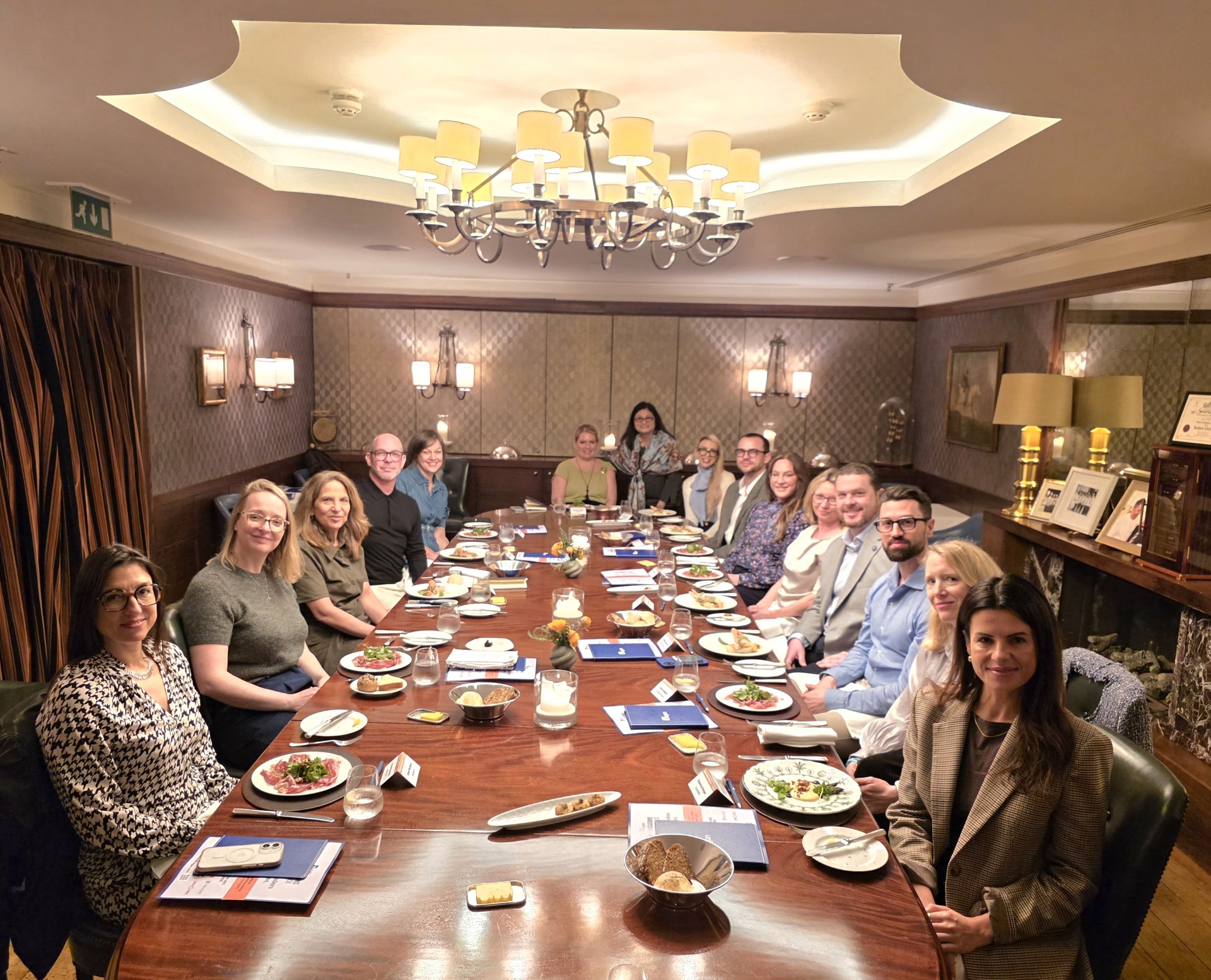
Cindy Knezevich, chief marketing officer at Interact, and Daren Jennings, chief sales officer at Interact, recently gathered communicators together at a roundtable cohosted with Ragan Communications in London to discuss these topics. Here are their impressions on the shift from employee engagement to employee experience and the future of the intranet.
Responses have been edited for brevity and clarity.
Question: What’s the difference between employee engagement and employee experience?
Cindy Knezevich: Employee engagement centers around how employees are feeling. Employee experience is giving them the digital workplace that they need to be able to do the best work they possibly can. That to me is a bigger, broader business initiative.
Daren Jennings: I would agree with that, and I’ll echo that employee engagement has been something that the industry has talked about for decades. And for all of the investment that our customers and every single organization on the planet, quite frankly, has been making towards improving employee engagement, engagement scores have been flat for 20 years and even declining, depending on the different cohorts that you’re starting to analyze.
So, what is the differentiator? Organizations that invest in it, we know that they have better business outcomes. But try as you might, the engagement to ROI is indirect. The R is farther away from the I than people want to see. To Cindy’s point, around having some of those hard business outcomes, the future of the intranet employee experience really isn’t about more content. It’s not about replacing various systems of record. The employee experience platform should be the experience layer across all of them where reliable information results in trusted action. That’s when you start to see some of those tangible business outcomes, where you’re having improved productivity, a more consistent experience across knowledge systems, having the correct information for your team so you can avoid mistakes and enable better work and ultimately higher engagement. These are starting to result in significant payback for people that are doing it well. And maybe that’s a shift we’ll see: instead of engagement resulting in better work outcomes, better work outcomes, through less friction, will result in higher employee engagement.
Q: What are some trends in reaching frontline and deskless workers? What’s effective?
Cindy Knezevich: The employee experience platforms that are successful are the ones that empower businesses to power their people, regardless of where they are and what device they use.
Daren Jennings: Years ago in the employee experience or intranet sector, adoption was a major concern for the knowledge worker. That’s largely been solved, and some of that is through group policy, like you’re forcing the homepage to be the intranet and behavioral patterns over time where people think to come to the intranet first and they actively seek out cultural communications alongside search and immediate problem-solving. A frontline worker’s need for an intranet is far more practical, in my experience, than it would be for a knowledge worker.
For the frontline worker, the intranet, the employee app, it really needs to deliver practical value. It’s access to better shifts, it’s enabling me to find growth opportunities within the organization, increase my income mobility, while also supporting frontline managers for better one-on-ones and team conversations.
There’s a trust element, the trust that my company is not actually going to be tracking me through my app, so I think as communicators start to think about the technology that is required for these different user groups, they also need to think about how they can provide practical value to the different cohorts.
Knezevich: Employees have seven fundamental needs that need to be met to do their best work.
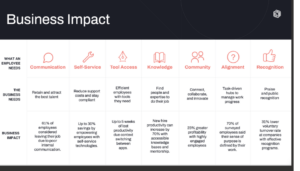
We think about communications as a one-time push, but frontline workers need a lot more than that.
Q: You recently held a roundtable in London in partnership with Ragan, talking about these issues with communicators. What were some of the headlines?
Knezevich: Right now, we’re really trying to help our customers articulate the value that they’re getting and connecting that value to business outcomes, so that generated some healthy discussion. Are people tracking the right metrics? Is click rate and open rate really indicative of how well impactful the employee experience is at your company, or is it really more about behavior change and in business results? In other words, (the industry is) going surface level when it comes to ROI. That was a good discussion. That resonated with a lot of people.
Jennings: One of the key points that I noticed from the group in London was that the communicators of today are already embracing AI as part of their everyday work and seeing the benefits. I heard a lot about sophisticated agents that are being created in terms of creating additional content and repurposing content, analyzing content, and even doing some deeper ROI level analysis on information that’s already existed. Where I see this going is we know that we don’t have a content problem anymore. Certainly, with AI, we can write plenty of information. So the future of the intranet is not about more content, it’s going to be about trusted action.
I see the future of comms actually leaning towards AI knowledge readiness across the organization. Comms leaders will increasingly become the stewards of institutional knowledge to ensure that it’s accurate, up-to-date, doesn’t conflict, and adheres to organizational guidelines, regardless of where it lives. Otherwise, we’re just going to be creating a lot of content that’s going to create additional confusion. There’s a governance layer part of it, but I believe that the comms leader of the future really needs to be the one who’s in charge of organizational knowledge as the foundation to AI readiness.