Your custom GPT now has a mandated retirement date
Set up your migration plan now to preserve approved voice and calibrated output before the deadline.


Stephanie Nivinskus is principal, Ragan’s Center for AI Strategy.
Getting a custom GPT to sound like your CEO was not a quick afternoon project.
You wrote detailed instructions and uploaded approved messaging examples alongside the reference material it needed. You tested it. Revised it. Then tested and revised it again. Rinsed and repeated until it was locked in — just in time for OpenAI to make an announcement that changed the whole plan.
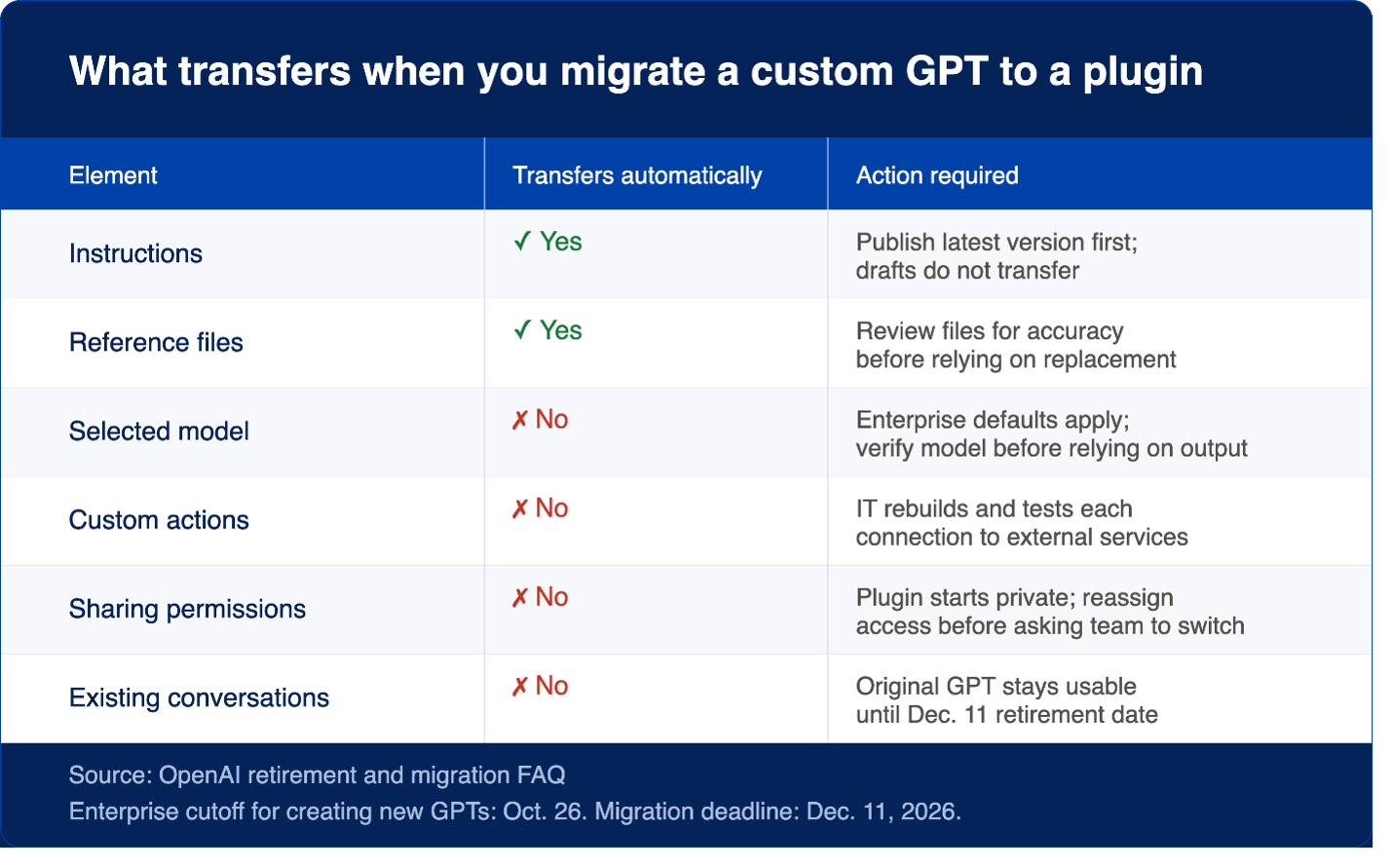
OpenAI is retiring custom GPTs Dec. 11, 2026 and asking creators to migrate them to plugins. The change affects all ChatGPT plans, according to its retirement and migration FAQ. Without a working replacement, the next person who needs that GPT will have to go back to doing things the way they were done before AI was part of your workflows.
Here’s a plan to migrate your GPTs:
- Find each GPT your team relies on: Ask colleagues which GPTs they use for recurring work, including tools built by consultants. Record each tool’s owner and the assignment it supports, then designate someone to manage its replacement.
- Save the instructions before the deadline. Copy each tool’s full instructions into an approved company folder. Save its original reference files alongside them, plus an approved output that shows what good looks like. If you have permission to use a tool but did not build it, contact its owner now.
- Publish your edits before you migrate. OpenAI’s migration uses the latest published GPT version. Drafts and unpublished edits do not transfer. Publish essential changes first; public sharing is not required. OpenAI lists Oct. 26 as the planned Enterprise cutoff for creating new GPTs. Your administrator can confirm your workspace’s timeline.
- Migrate and check what custom actions need rebuilding. When migration becomes available, open My GPTs and select “Migrate to plugin.” Custom actions do not transfer automatically. Ask IT to rebuild and test any connection your GPT uses to interact with another service. Your team should resolve problems before rollout. An intended user should then confirm access by completing a real assignment.
- Give someone responsibility for the deadline. Each migration needs an owner and an early December internal deadline. By Dec. 11, ensure that person confirms the replacement works for the colleagues who depend on it.
The voice calibration and approved outputs your team built into those GPTs are worth protecting. Begin the migration process now to avoid unwanted surprises later.