Hot take: Your managers don’t need that FAQ
Darcie Rosenthal of ADM shares how to simplify manager communications, challenge AI output and build messages around what employees actually need.

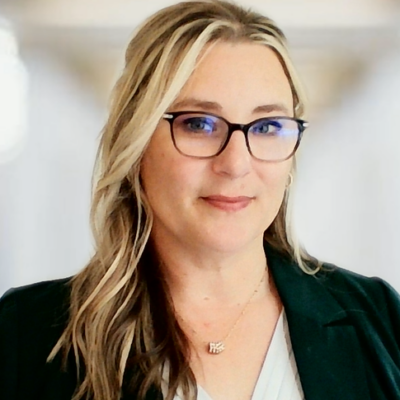
Long before Darcie Rosenthal was helping shape how ADM communicates across a global workforce, she was making fast editorial calls in morning newsrooms across the South and Midwest.
Now director of communications planning and performance at ADM, Rosenthal helps the company’s global communications team work more effectively by strengthening the standards, data practices and coordination behind its work. At ADM, she has partnered on internal communications across nearly every business, function and major company initiative. That experience has given her a broad view of how different employee groups find, process and act on information.
Outside of work, Rosenthal is an avid reader who has already finished about 130 books this year through Fable. She gravitates toward fiction, particularly thrillers, historical fiction and literary fiction.
Join Darcie and comms leaders from Dawn Foods, EIS and more for Ragan’s virtual Manager Communications Workshop on Sept. 2nd. Register now.
You started your career producing morning news. What did working in a newsroom teach you about communication that you still rely on today?
Working in news taught me rigor and adaptability. You cannot put on a live show every morning without standards, processes, role clarity, and a very high tolerance for unpredictability. Every day, I went into work at midnight and left around 8 a.m. I would build a two-hour live show, deciding what stories we’d tell and writing or rewriting nearly everything for our 5 a.m. and 6 a.m. audience, making sure it all happened exactly on time. Sometimes a major story would break while we were on air and I’d have to throw everything I’d prepped overnight out the window. That experience taught me the importance of having excellent standards and processes in place so you know exactly what to do when things change at the drop of a hat. It also trained me to jump in and help wherever I’m needed, no matter what the task is or whose job it technically belongs to.
What’s something you used to believe about internal communications earlier in your career that you’ve since changed your mind about?
That being a good writer was the most important skill to have. It’s still non-negotiable. But I’ve learned it’s just as important to build and maintain stakeholder relationships and deeply understand your audiences. You also need real project and change management skills. Those are what let you have strategic conversations with internal clients, advocate for your employees to get clear communications, and be a strategic advisor to leaders.
Companies often treat managers like another communications channel. Do you think that undersells the role they actually play?
Yes and no. Our employees want to hear directly from their managers, and managers are one of our most valuable channels for sharing information. That’s why we emphasize thinking about managers as both an audience and a channel. But it’s important to think about them as our colleagues first. Managers have enough on their plates already. Anything we give them to communicate to employees must be something they can pick up and turn on or share out. It’s a way of showing respect to our team members. We can’t give managers another part-time job of sifting through communications to figure out what they need to know, share, or do. So, it’s not enough to think of them as just another communications channel. We have to think about the people behind the channel and what else is on their plate. Otherwise, our manager communications won’t be effective.
What should communicators protect when they’re using AI to adapt a message? What should never get “optimized” away?
Our natural curiosity and skepticism, and our understanding of our people. Two questions I often ask as a follow-up to AI output are “why is that your recommendation?” and “how do you know that?” Those are questions I’d ask a team member if they were presenting a draft or a plan to me. Why shouldn’t I ask an AI tool the same thing? It sharpens my refinements and helps cut through AI delusions or hallucinations. The other part is understanding our people. There are things AI would write that I know would make my colleagues Dan and Lindsay roll their eyes. I know what process colleagues are going to come up against on the other end of a link in a way AI doesn’t, so I know whether a communication needs more detailed instructions or not. Those instincts come naturally to a lot of internal communicators, and we shouldn’t lose them just because we’re delegating some tasks to AI.
If I opened the average manager toolkit today, what would you immediately cut?
This might be a hot take, but Frequently Asked Questions (FAQs). Think about how you consume information. When was the last time someone asked you a question and you said, “Hold on, let me sort through this FAQ to find the answer?” Managers don’t have time for that either. Instead, write your primary communication so managers truly understand the topic, not just the talking points. If they understand the “why” behind a message, they can field whatever comes up on their own, confidently, without a script. Then give them a real person or mailbox for anything genuinely outside their depth.
For fun, what book, TV show or podcast are you listening to now and can you apply any of the lessons to your work?
On my way to the Ragan Employee Experience Conference in Nashville, there were three people in my half of the airplane row. One was reading a book on a tablet, one was reading a hard copy, and I was listening to an audiobook. All of us consume books, but in three different formats. It got me thinking about how we approach communications. Our job isn’t to post a story once and hope the right people see it in the format we happened to choose. It’s to make sure the core message reaches people however they prefer to receive it. With AI, adapting one message into multiple formats has never been easier, especially if AI is handling the reformatting. It is on us to make sure we’re getting those messages reformatted and delivered.
Isis Simpson-Mersha is a conference producer/ reporter for Ragan. Follow her on LinkedIn.