USAA’s AVP of communications on the most important rule in a crisis
Lewis Pryor of USAA says just because you can share information doesn’t mean it’s the right message — understanding the audience comes first.

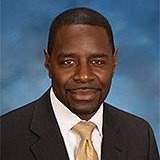
Lewis Pryor is assistant vice president of communications and public affairs at USAA, where he leads external communications and helps guide the company through moments that test trust and credibility.
Before USAA, Pryor served as assistant vice president of public affairs at State Farm, overseeing media relations, social media, community engagement and national public relations campaigns. He also led internal communications for major organizational changes, partnering closely with senior leaders.
Pryor’s communications career began at Ketchum in Atlanta, where he learned the fundamentals — pitching reporters, building relationships and figuring out how to frame a story that lands. He credits those early days with shaping how he approaches communications today.
What was your first job in PR?
I was an undergraduate student at Clark Atlanta University, where I was majoring in public relations. I met someone at a PRSSA Day who had an internship opportunity at a shopping mall in Atlanta, working with the advertising and marketing director.
I did that internship, where I was writing content for the circular and drafting press releases for community events held at the mall. Later that summer, I worked with a news assignment editor at a local station in my hometown in Florida, which gave me a chance to see the other side of how news was done.
My senior year was when I interned with Ketchum and was able to see the agency side of the PR world. When you think about it, I worked with a news station, an organization and then an agency, which gave me a holistic perspective. After that agency experience, I knew this was something I wanted to do. I converted that internship into my first full-time role outside of an internship.
Throughout your career, you’ve worked across external and internal communications, media relations, the whole gamut. What’s one crisis moment that stood out to you and shaped how you approach communications today?
Flipping throughout my career between internal and external communications and supporting senior leaders with executive positioning gave me a well-rounded perspective. It’s hard for me to think about internal or external communications in isolation.
One early crisis that really shaped me was Hurricane Katrina, when I was working for State Farm. Nationally, the focus was on New Orleans and the levee failures. But in my opinion, the true ground zero was Mississippi. You had generational homes with insufficient coverage wiped out entirely. In some cases, homes were lifted off their foundations, floated for miles, and landed mostly intact. I visited the area early on, and it’s hard to put into words the devastation. Families lost everything and didn’t have sufficient coverage.
While insurance plays a role in taking care of people, you can’t pay for coverage that doesn’t exist. At the same time, the organization was working incredibly hard to support people but was being vilified publicly. I was responsible for helping employees understand the truth because there were a lot of inaccuracies being shared.
We had to build credibility internally while also positioning the story externally with the media and navigating pressure from elected officials. The battle for truth lasted many years. It taught me how difficult narrative control is and how much collaboration, thoughtfulness and willingness to engage it requires.
You work in a highly regulated field. How do you think about transparency, especially when you can’t share everything you’d like to, particularly with employees?
Transparency starts with the organization’s values and how you treat the profession. I work for a company where integrity is at the heart of what we do. We serve the military community, which is a noble mission, and that makes honesty and transparency essential.
As a communicator, I’m guided by professional ethics. It’s a balancing act. I think about: What can we say? What should we say? And what needs to be communicated?
Just because you can share something doesn’t mean it’s the right message. You have to create understanding and consider the audience. We look at the full universe of information, determine what’s appropriate based on risk and context, and then communicate accordingly.
Communicators are advocates for the audience. We help leaders understand how employees feel and what message will resonate. While we don’t always make the final decision, more often than not, when we guide leaders through that process, we land on the right outcome.
What tips do you have for coaching managers to deliver messages during a crisis, especially when they’re processing similar emotions as their teams?
It starts with honesty and listening. I always ask: What are the audiences saying? What are employees sharing? You have to start there.
I believe in making clear recommendations aligned with objectives while offering optionality. If a decision-maker says no, you still want to provide paths forward. For frontline leaders, it’s about truly understanding employee feedback and using the content you have. When it’s insufficient, send that feedback back up and ask for more information.
A good example is our social media advocacy team. We initially restricted them with compliance-driven responses, which left members feeling unheard. Once we empowered them within a framework to engage authentically, we saw double-digit improvements in sentiment. Leaders listened, acted, and gave teams better tools — and it worked.
What’s one thing you wish every communicator would stop doing in a crisis?
The biggest one I would say is: don’t be a victim. One of my key takeaways for this session is this notion of control. Control what you can control and manage what you cannot. There’s always something you can do. You just need to ask yourself: What are the predictable consequences of those actions? And that’s how you make your recommendations.
So if I come with three recommendations — going back to my notion earlier — and you say, these are the three options we believe we have, here’s what we can expect from option one, two and three. We recommend three because of the outcome and the alignment to the objective. You may not have the final decision, but you’ve managed that as the best way you could, and you provided strategic counsel to whomever you’re counseling, and it’s their decision.
And then the other thing I will say is: What’s internal is external, and what’s external is internal. While we’ve got key stakeholders and we need to target messages to stakeholders, we should absolutely not think in such an isolated way that the people who are doing those aren’t working hand in hand. You should be able to be interchangeable to a large degree and understand the impact of what you’re doing externally will have internally in the same way, the other way.
What’s one tool you use every day, and why?
I use AI every day. I use a range of tools, including Microsoft Copilot, PowerPoint summarization tools and a communications-focused AI platform called Writer that helps us develop personas and voices.
AI helps me be thoughtful about my time. I no longer need to write a first draft of a leadership announcement or press release. I can generate that quickly and then focus on strategy, including distribution, targeting and channel selection.
AI does not replace strategic thinking. It frees up time for it. The next-level communicator understands how to leverage AI for efficiency while focusing on what humans do best: strategy, judgment and audience insight.
To learn how to navigate employee trust, transparency and communication breakdowns during a crisis, join Ragan’s Crisis Communications Virtual Conference, where Lewis Pryor, assistant vice president of communications and public affairs at USAA, will share real-world lessons from leading through high-stakes moments. His session will explore how to spot cracks in employee confidence, align internal and external messaging, and guide leaders under pressure on Wednesday, Jan. 28. Register here.
Isis Simpson-Mersha is a conference producer/ reporter for Ragan. Follow her on LinkedIn.