How to turn your organizational ambassadors into storytelling engines
Turning authentic member stories into measurable strategic assets.


Internal communicators spend enormous energy refining messages and planning distribution. But in an era when audiences trust peers more than institutions, the most credible messenger may not be employed by your organization.
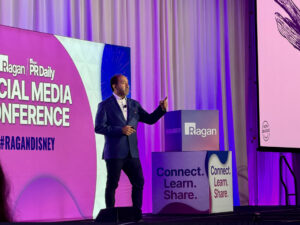
At Ragan’s Social Media Conference at Walt Disney World next month, Paulette Bleam, director of social media at the American Academy of Physician Associates, will share how AAPA equipped practicing physician associates to serve as trusted messengers both inside and outside the organization.
“People trust people more than they trust a brand,” Bleam said. “When someone they follow and respect is speaking positively about an organization, that credibility carries real weight.”
That belief was the foundation of the AAPA’s Social Media Ambassador Program, which launched in 2024. The goal was to amplify the profession and key organizational initiatives both within the community of physician associates and to the wider world. Since the launch date, ambassador-driven promotions have sold more than 200 conference registrations among AAPA members, with one week alone generating more than $31,000 in revenue.
Inside the ambassador program
The AAPA’s ambassador program features 18 carefully selected professionals from diverse backgrounds and specialties within the field. None were professional influencers or creators. They were practicing professionals already advocating for their field. They just needed to be given structure and support to amplify their voice.
“I saw an opportunity to bring together our biggest advocates,” Bleam said. “The idea wasn’t to ask them to do something new, but to reward them and amplify what they were already doing organically. The goal was to unify the voice of the profession by helping them identify additional opportunities to use their voice as opposed to telling them what to say.”
The program is active on major social platforms, most notably TikTok. The program was intentionally designed around ambassador autonomy. Bleam refused to script the ambassadors, opting instead to provide context and let professionals translate it in their own voice.
“That’s what builds trust with the intended audience — and by extension, trust in our organization,” she said. “We’re not asking them to become spokespeople. We’re recognizing that they already are. Authenticity is key. I will never script an ambassador. We provide guidance, but our ambassadors decide what to post, when to post it and how to talk about a topic. Audiences can immediately spot scripted or overly polished content.”
Bleam and her team give them updates on the advocacy efforts of the organization, offerings for members and upcoming events — and then they let them communicate the message as it suits their own style.
“When we say we want a unified voice from our ambassadors, we don’t mean uniform messaging,” Bleam said. “We mean shared understanding. If ambassadors have accurate, timely information they can communicate it in ways that feel natural to their audiences.”
@mademywayto_pa Meet the AAPA Social Media Ambassadors! #MadeMyWayToPA #PAlife #physicianassistant #PhysicianAssociate #nycpa #fullhouse ♬ original sound – HaueterFamily
Bleam said that ambassadors aren’t paid for their work, but instead compensated in other ways. That’s an intentional choice by the AAPA to preserve relationships.
“Payment shifts the dynamic into a traditional influencer relationship, and that’s not the environment we want to create,” she said. “Many of our ambassadors have paid brand deals elsewhere, but this program is about community, autonomy and perks — not transactional content.”
Finding the stories in your ambassador’s day-to-day
It’s one thing to talk about value. It’s another to show it.
When communicators want to move beyond promotional language, Bleam said the most powerful narratives sometimes come from casual conversations. That’s how one of the program’s most compelling stories surfaced.
“One ambassador mentioned in passing that she had used our Salary Report to negotiate a $40,000 raise,” Bleam said. “That wasn’t a campaign idea or something we came up with — it was a real-life moment. I asked if she’d be comfortable sharing that story on camera, and she said yes. That single post did more to demonstrate the tangible value of membership than any promotional graphic we could have created.”
This is a key case study in the difference between messaging about value and truly showing it. For comms pros, an offhand comment like this can form a blueprint of a story — even when the communicators themselves aren’t the ones telling it.
“The best stories don’t come from a content calendar — they come from conversation,” Bleam told Ragan. “When you invest in relationships and really listen, ambassadors will tell you what’s happening in their lives. Our role isn’t to script those moments. It’s to recognize them and help bring them to light.”
In a comms environment with fleeting trust and attention, organizations don’t need to focus on louder messaging. They need messengers their audience will believe and relate to. And to give them the opportunities to tell their stories.
To register for Ragan’s Social Media Conference, click here.
Sean Devlin is an editor at Ragan Communications.