An inside look at St. Jude’s strategy for building repeatable change comms
Insights from the preconference workshops at Ragan’s Employee Experience Conference in Nashville.

In the absence of an official change announcement, employees will fill the void on their own.
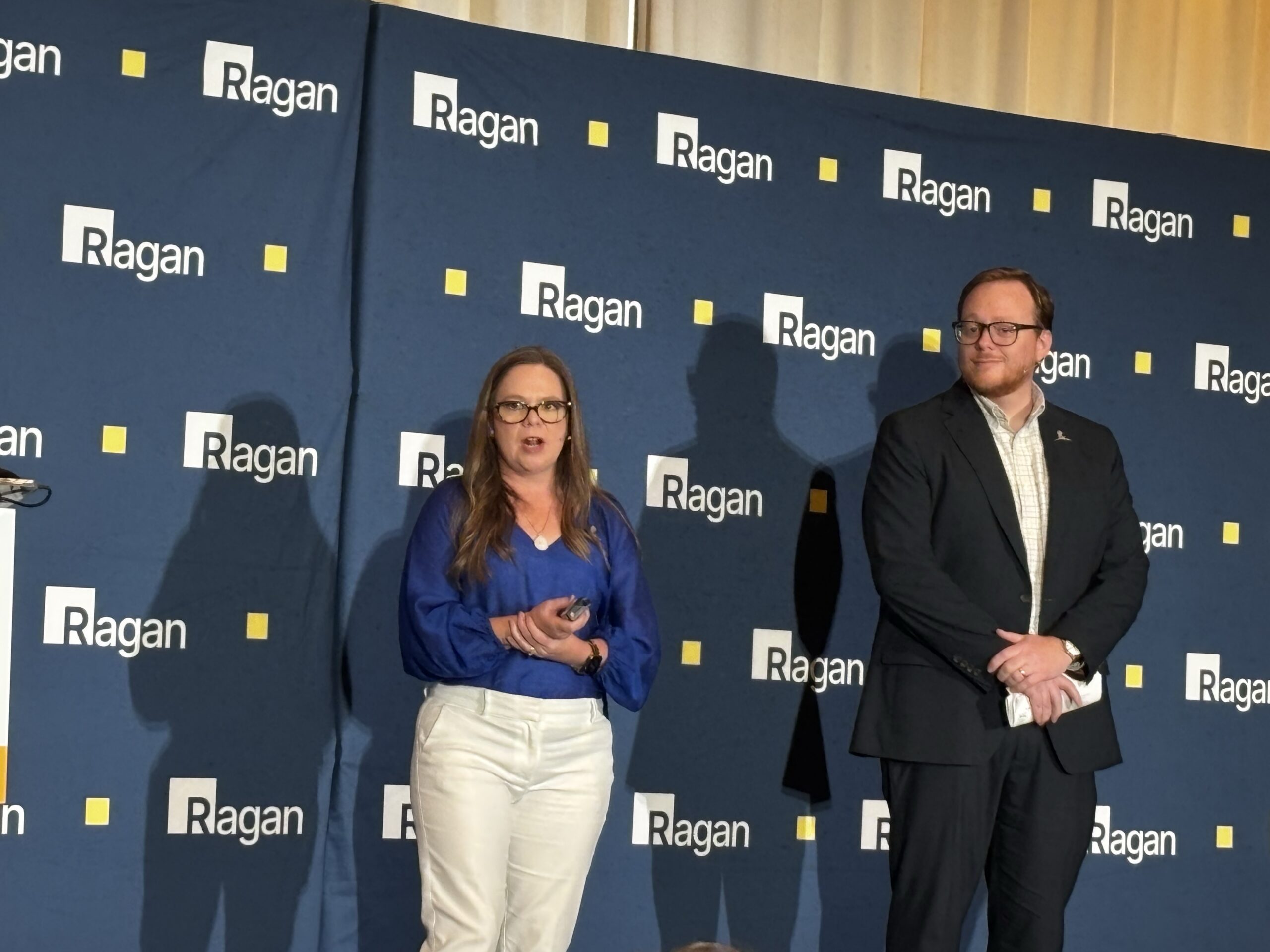
During Ragan’s Employee Experience Conference, which is taking place in Nashville this week, Hilary Hamblin, manager of organizational change management and internal communications, and Ryan Poe, director of executive communications, both with St. Jude Children’s Research Hospital, shared how the organization has built change comms plans that can stand up to any organizational shift. The comms team’s strategy is now being put to the test as St. Jude prepares for one of its largest workplace moves with a major construction project of new office buildings.
“It’s kind of hard to hide two 15-story buildings, so people knew this was coming and they were talking about it,” Hamblin said, referring to St. Jude’s new major office building construction project. “We’re moving 3,000 people, almost half our workforce, into these two new buildings. We knew from the beginning that communication needed to be a collaborative effort.”
The building project is the latest in a list of major changes at St Jude over the last several years. The big shifts included implementing a new electronic health record system, rolling out a new intranet platform, combining dozens of HR, finance and supply chain platforms into Workday — and on top of that, hiring 2,300 new people. Hamblin said that amid all these changes, the comms team realized they needed a repeatable change comms process.
“As our employees become accustomed to the way we talk about change and the way we introduce change, it becomes easier for them to go along with those changes because they know what to expect,” she said. “It builds trust.”
Get the right people ready for the messaging moment
Creating much-needed familiarity during major changes starts with determining where employees should go for information and who they should hear it from. Hamblin said that at St. Jude, the process begins with the comms team identifying an executive who can explain the strategy behind the changes and remain visible and available during the process. But she added that during the day-to-day process of change comms, managers need to be prepared to carry the dialogue forward.
“Please do not wait until you have a major change happening to prepare your people managers. Now is the time,” Hamblin said. “The last thing you want is for an employee to go to their people manager and the manager says, ‘I know as much as you do.’”
She told the audience that St. Jude added an internal module for new managers and supervisors and that the comms team also created a new email newsletter, in which managers get a rundown of need-to-know information and guidance on how and when to share it.
“A lot of times managers don’t know, ‘Am I receiving this information because I need to know it? Am I receiving this information so I can share it? Can I share this?’” Hamblin said. “If you want them to share something with their team, be very explicit.”
Employees also need a reliable source of truth during periods of change. At St. Jude, that’s the St. Jude Hub, the hospital system’s intranet platform where each change project has a dedicated page.
“As soon as your employees get a whiff that something is happening, they are talking about it, even if we are not,” Hamblin said. “If you don’t know all the details, tell them you don’t know all the details. Tell them when they can expect to find out more information and where that information will be.”
Tell employees what’s not changing
The tower building project is an outwardly visible change at St. Jude, but the organization has also employed a similar approach for more day-to-day matters. Poe said that included the rollout of a set of cultural principles across St. Jude.
“The values are who we are,” he said. “The cultural principles are how we act. This cannot be something you say once and forget; it has to be embedded in the culture. We wanted the principles to articulate the culture, not create a new one.”
Before the launch of the principles, St. Jude gathered feedback from leaders and employees about how they already showed up in their work. The comms team then introduced the results of these conversations through meetings, town halls and the St. Jude Hub.
“We have more than 30 departments across St. Jude, and each one had a conversation about what these principles meant in its own area,” Poe said. “We wanted employees to understand how they applied to the work they were already doing, rather than just hear a broad organizational message.”
That gave the rollout more staying power than a one-off announcement. It also provided communicators a blueprint they could carry over into the next change messaging plan.
“In the midst of change, you have to remind people what won’t change,” Poe said. “For us, what isn’t changing is our culture and mission.”
Sean Devlin is an editor at Ragan Communications. You can connect with him on LinkedIn here.