Q&A: Building an employee experience that isn’t just ‘corporate wallpaper’
Make your market message an employee reality.


LHH launched its new employee value proposition around the idea of forming “a beautiful working world.” For Tony Kihl, director of global internal communications at LHH, that formed a clear employee experience challenge. If LHH was telling that story to the outside world, its employees needed to see and feel it inside the organization, too.
“We did not want it to feel like corporate wallpaper,” Kihl said. “We wanted it to feel real and human.”
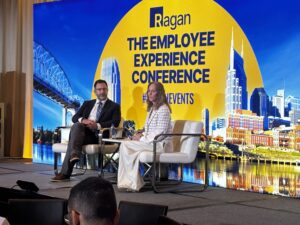
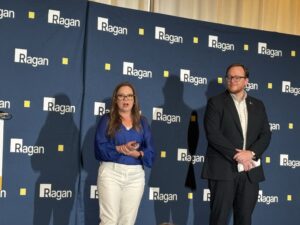
Kihl will present his findings from his organization’s EVP launch at Ragan’s Employee Experience Conference this August. Check out our Q&A with Kihl below.
Ragan: How did LHH approach the EVP launch as a business transformation rather than a messaging exercise?
Tony Kihl: We definitely treated it more as a campaign than a set of words or one communication that went out. For us, it was about connecting the employee experience to where the business was going.
We had just launched a new value proposition to the market around creating a beautiful working world. But that story would only work externally if our EVP brought it to life for our own people. If we say we are building a beautiful, working world for clients and candidates, but our colleagues are not living that experience, then it is not going to work.
So the big question was: How do we make that real for colleagues? That meant connecting the EVP to leadership, career development, onboarding, recognition, manager conversations and the employee journey. It could not just be a communication effort. It had to be built into the experience from when someone joins the organization through all the moments in between.
What employee feedback helped shape the EVP?
We started by listening. LHH supports colleagues in 60 countries, across different functions and levels, so the big thing was making sure we got as many voices as possible.
We used surveys and roundtables, including English roundtables and localized, translated sessions, so we could hear from people in different countries and different roles around the globe. The goal was to understand what people already valued about LHH, where the gaps were and what would make the EVP feel authentic instead of aspirational. We did not want it to feel like corporate wallpaper. We wanted it to feel real and human.
That feedback helped with buy-in, too. Once colleagues can see that their voices helped shape the direction, it is much easier to get broader buy-in across the organization.
How did internal comms partner across the organization to make the EVP real?
I would describe internal comms as the connector and translator between all these different groups.
With HR, we partnered on the employee experience side: onboarding, career growth, recognition, engagement and manager enablement. Those are all necessary pieces of the EVP. If we did not have HR buy-in and the right ways to bring those pieces to life, it was never going to succeed.
With IT and our digital teams, the focus was on making sure colleagues had easy access to the right resources. That was especially important as we built our Beautiful Working World Hub, which became the next phase of the EVP internally. It highlights career growth, different voices from around the globe and stories that bring people together in one place.
Leadership was also a big focus. I think sometimes organizations do not put enough emphasis on leadership enablement during big changes. More than likely, if employees had questions, they were going to their leaders first. So we needed leaders to feel equipped and consistent. We gave them talking points and cascade decks they could use in team meetings and one-on-ones. The idea was: say this, ask this, listen for this, do this. Then leaders could build the conversation organically with their teams.
How did you bring the EVP to life across channels?
We tried to avoid the “we sent an email, it is live, check the box” approach. The launch mattered, but the reinforcement mattered more. We used global town halls for shared moments and leader videos to bring visibility, emotion and the human element to life. We used Viva Engage for social interaction, including countdowns, colleague videos and fun ways to get people involved across the globe.
We also created intranet stories around career pathways and colleague experiences. The Beautiful Working World Hub became an ongoing place for colleague stories, career growth examples, client impact stories, videos, podcasts and even practical assets like Teams backgrounds.
The goal was to show what the EVP looked like in real action. It could not just be a bunch of words. People learn and take in information in different ways, so we had to use a lot of different communications to make it stick.
What metrics helped you understand whether the EVP was influencing outcomes?
We looked at a lot of different things.
On the communication side, we looked at town hall participation, intranet engagement, Viva Engage traffic and activity, video views and other content metrics. Typically, we might see 50% to 60% engagement in town halls. With this launch, tied to the value proposition, we saw closer to 90% to 100% engagement, which was a big win.
On the people side, we looked at engagement survey results over time: whether people were happier working at LHH, whether they were more willing to recommend the organization and whether they could see their careers staying here. In some cases, we saw those stats move 20% to 30% higher.
We also looked at internal mobility, participation in career development workshops, onboarding feedback and employer reputation. There is no one perfect dashboard, but we tried to measure it in a lot of different ways to show whether we were making positive movement in the areas we cared about.
A year later, what is your biggest takeaway?
What worked well was the integration. The EVP was connected to the value proposition, the business strategy, leadership communication and the employee journey. That made it feel bigger than a one-time HR launch.
The storytelling also worked. Real colleague stories, career journeys and client impact examples helped make it feel human and real — not just talking about the EVP, but showing how it worked in practice.
What was harder was sustaining the same level of energy after the initial launch. The first moment gets attention, but after that, it takes discipline. There are always competing priorities, so we had to stay focused and keep making it a priority.
To register for Ragan’s Employee Experience Conference, click here.
Sean Devlin is an editor at Ragan Communications.