Why your message isn’t landing, according to American Planning Association CCO
Kate Meyer of the American Planning Association shares why starting with your audience makes every message stronger and every story clearer.

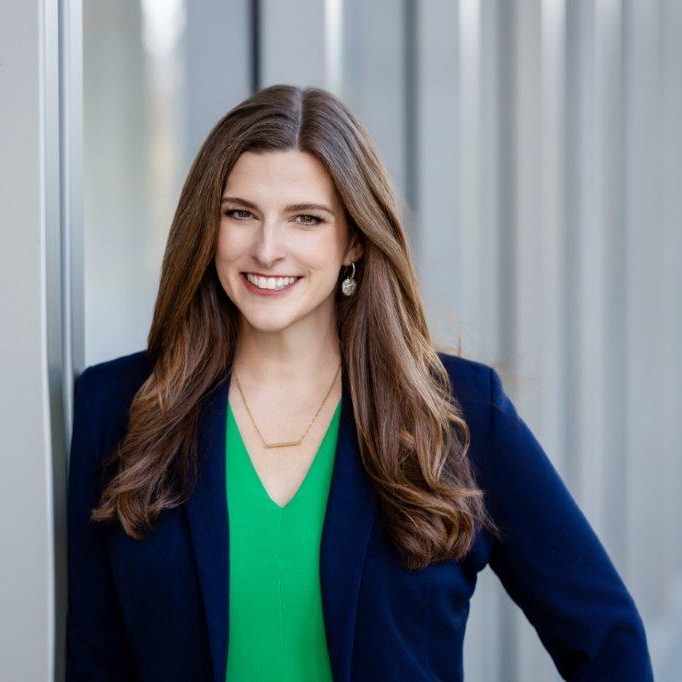
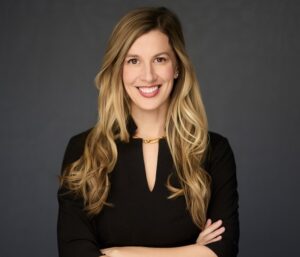
Kate Meyer is chief communications officer at the American Planning Association, where she leads brand, marketing, communications and public affairs to elevate the voice and impact of planners nationwide. An award-winning communications executive with more than 20 years of experience, Meyer has built her career helping mission-driven and global organizations connect strategy to storytelling.
She has developed her career in roles at Amgen, the Alzheimer’s Association and Edelman, where she guided corporate reputation, aligned communications with business goals and advanced engagement with key audiences. Known for her collaborative style and sharp strategic lens, Meyer is passionate about using communications to drive understanding, trust and real-world impact.
What are you most excited about in your role with the American Planning Association?
I’m thrilled to be working for the organization and its 40,000 members, with a mission of great communities for all.
What is really exciting to me is the idea that planners are future-looking. They want to look at innovative and practical solutions to fulfill that goal. In my role, and with the team here, we really want to be a strong conduit and support for the membership.
I have worked for many different organizations, and one of the things that is really lovely in this opportunity is the fact that it is a membership organization. There are different dynamics compared to the nonprofits, companies and for-and agencies I’ve worked for. So it is a new element and growth opportunity in my experience portfolio.
What was your first role in communications?
My first job out of college was the Big Tem Robert Hammel internship, named after Robert Hammel, a storied sports reporter. These roles in college athletics were one to two years long, and I was there for two years.
From there, I went to Edelman. That was my first foray into traditional corporate and reputation management communications.
You’ve worked across agency, nonprofit and corporate environments. How have those experiences shaped your approach to leading communications today?
I think one of the really good fortunes of having worked in all of those different environments is being able to see across an organization and where things might apply in different ways.
I probably have a perspective that might be a little bit different. I ask a lot of questions, but I also connect dots in different ways across an enterprise.
There might be things that come from my corporate environment or my large voluntary health nonprofit that apply to scenarios at APA.I think that’s already lending really well as I’m learning about the organization and charting that course for myself and the team.
Was there a moment that defined you as a communicator or leader?
When there has been a change. People don’t always think change is a good thing, particularly in a work environment. Sometimes that is restructuring, sometimes that is different teams reporting to you for different reasons at different points in time.
That can be an evolution, and I will say that change and that experience, and being able to open yourself up to other experiences when the change comes, has been really important and helped me in growing my career.
When you are going through it, you may not feel like you are growing, but when you getting different opportunities than maybe what you were, or were not, expecting or hoping for, I think that has really served me well.
How do you balance messaging for different audiences while staying consistent?
I think we always go back to the goal of what we are communicating and why.
If you have that as a North Star, what is that goal, what are we communicating and why, how you filter that for your audience is really dependent on who the audience is and how they receive it.
For example, a policymaker may need data in a different way. A member of APA may need a different illustration, maybe some data and an example of something that was accomplished. The general public needs a fundamental grounding in what planning means to them.
People in the community may see a parking lot, but planners see a park for their community. What is that illustration for the audience? It goes back to what we are communicating and why, and sometimes why now, to help frame the messages.
Outside of your professional work, what experiences or values most influence how you lead?
I wish I could say I had this great hobby and talent, but I really value relationships.
and have a genuine curiosity about people, in long-term relationships with family, partner and friends, many of whom are former colleagues, but also everyday interactions, like at my local coffee shop. I learn people’s names and their interests.
It lends really well to building relationships in the workplace, collaboration and influences how I lead my team…
For communicators earlier in their careers, what skills or mindsets matter most right now?
I think about early in my career, and as I see early practitioners, I encourage folks to learn or ask about the big picture early on, because oftentimes, early in our career, we’re working on a piece of the puzzle.
We may or may not get all the explanation up front but seeking that out or trying to learn that in a different way is really important. Once you start to do that, the dots of the work connect so much faster.
As you grow in your career, you go from doing the task to thinking about what the next couple of steps are or what recommendation you have. If somebody asks a question, come up with a recommendation. It doesn’t have to be perfect.
Too often people are focused on checking off tasks, but where does that fit into the bigger picture is key. That really lends itself to growth and knowledge-building within a career.
Isis Simpson-Mersha is a conference producer/ reporter for Ragan. Follow her on LinkedIn.